The typical home in Montclair, New Jersey is now worth $1,102,512, up 6.6% over the past year, according to Zillow's latest data. For homeowners who've been in Montclair for a decade or more, that's a remarkable amount of equity sitting quietly in a single property. It's also exactly the kind of number that gets people running a very specific comparison in their head, and I've spent 15 years helping households work through it: moving to Myrtle Beach from Montclair isn't just a lifestyle change, it's a financial decision with real numbers behind it, and those numbers are worth understanding before you decide either way.
Why Montclair Keeps Climbing
Montclair's appeal isn't a mystery to anyone who's spent time there. It's one of the more consistently sought-after NYC commuter towns in New Jersey, served directly by NJ Transit's Montclair-Boonton Line, with a downtown that mixes walkable restaurants and shops with a strong reputation for schools and community. That combination — a genuine commute to Manhattan paired with small-town character — is exactly the formula that keeps demand high and inventory tight, and it's a big part of why prices there have kept climbing even in years when the broader Northeast housing market has cooled elsewhere.
None of that is a knock on Montclair. It's a legitimately excellent place to raise a family or build a career near New York City. But "excellent place to live" and "most efficient place to hold onto your money as you get closer to retirement" are two different questions, and the second one is where a comparison to a place like Myrtle Beach actually starts to matter.
A statewide Housing Cost Index built from C2ER Cost of Living Index data puts that comparison in perspective. New Jersey scored 144.3 on a scale where 100 represents the national average — meaning housing costs across the state run roughly 44% above that baseline. South Carolina scored 79.8, about 20% below it. Those two numbers sitting on the same scale are a useful shorthand for the broader financial picture behind moving to Myrtle Beach from Montclair, even before getting into property-specific numbers like Montclair's own median value.
What Moving to Myrtle Beach from Montclair Actually Changes Financially
Here's where the numbers get specific. New Jersey has the highest effective property tax rate of any state in the country, averaging 2.11% statewide, with Essex County — Montclair's home county — running a comparable 1.91%. South Carolina's rate on an owner-occupied primary residence, by contrast, runs closer to 0.33%.
Run that against Montclair's own $1,102,512 typical home value and the gap stops being abstract. At New Jersey's 2.11% statewide average, that's roughly $23,260 a year in property taxes alone. At Essex County's 1.91% rate, it's closer to $21,058. At South Carolina's 0.33% rate on a comparably priced home, the annual bill drops to around $3,638. That's a difference of somewhere between $17,000 and $19,600 every single year — not a one-time closing cost, but a recurring number that keeps compounding for as long as you own the home.
That gap alone is a meaningful part of what moving to Myrtle Beach from Montclair actually changes for a household's long-term budget, and it's before factoring in anything else about the cost of living difference between the two states.
The Bigger Tax Picture: New Jersey vs. South Carolina
Property taxes are only one piece of it. New Jersey's top marginal income tax rate is 10.75%, applying to income at or above $1 million — the fourth-highest individual income tax rate of any state in the country, trailing only California, Hawaii, and New York. New Jersey did away with its estate tax back in 2018, but it still levies an inheritance tax on transfers to certain non-immediate relatives, which is worth knowing about for anyone doing longer-term estate planning.
South Carolina's picture looks different across the board. It doesn't tax Social Security income at all, and it has no state estate or inheritance tax whatsoever. None of this means New Jersey did anything wrong — it means the two states are simply built around different trade-offs, and a household that's spent decades absorbing New Jersey's tax structure without much choice in the matter is often surprised at how much of that structure is optional once they're no longer tied to a job or a school district there.
It's also worth being clear-eyed about what doesn't change. Federal income tax, Medicare, and Social Security's own federal treatment stay exactly the same no matter which state you live in — this comparison is entirely about the state-level layer on top of that. But for a household already paying New Jersey's property tax rate and its income tax rate on the same paycheck, that state-level layer is often larger than people expect until they actually add up both numbers side by side.
Still Close to Home: The Flight Math
A common hesitation for anyone considering a move like this is the fear of feeling cut off from family and friends back home. In Montclair's case, that concern doesn't really hold up once you look at the actual travel time. United operates nonstop flights from Newark to Myrtle Beach, with roughly 19 departures a week — close to three flights a day — and a flight time of right around two hours.
That's a shorter flight than plenty of people already make for a weekend trip elsewhere in the country. For anyone weighing a move who still has kids, grandkids, or aging parents in the Montclair area, a direct two-hour flight out of the same airport many Montclair residents already use for other travel is a genuinely small trade-off, not the kind of distance that ends up meaning you rarely see each other.
With close to three flights a day, there's also enough schedule flexibility to make spontaneous trips realistic in both directions — a long weekend visit north, or family flying down for a week at the beach, rather than a once-a-year trip that has to be planned months in advance. That kind of frequency is a meaningfully different experience than a move to somewhere with one flight a week or a connection required each way, and it's worth factoring into how "far" this move actually feels once you're living it rather than just picturing it on a map.
What This Means If You're Watching Montclair's Market Right Now
A home appreciating 6.6% in a single year is a strong run by any measure, and it puts current Montclair owners in a particularly good position to act on this comparison rather than just think about it. Selling into a market that's still climbing, then redeploying that equity into a state running a fraction of New Jersey's property tax burden, is the kind of alignment that doesn't stay this favorable indefinitely — property tax gaps this size get closed slowly, if they close at all, but home values don't rise 6.6% every year forever either.
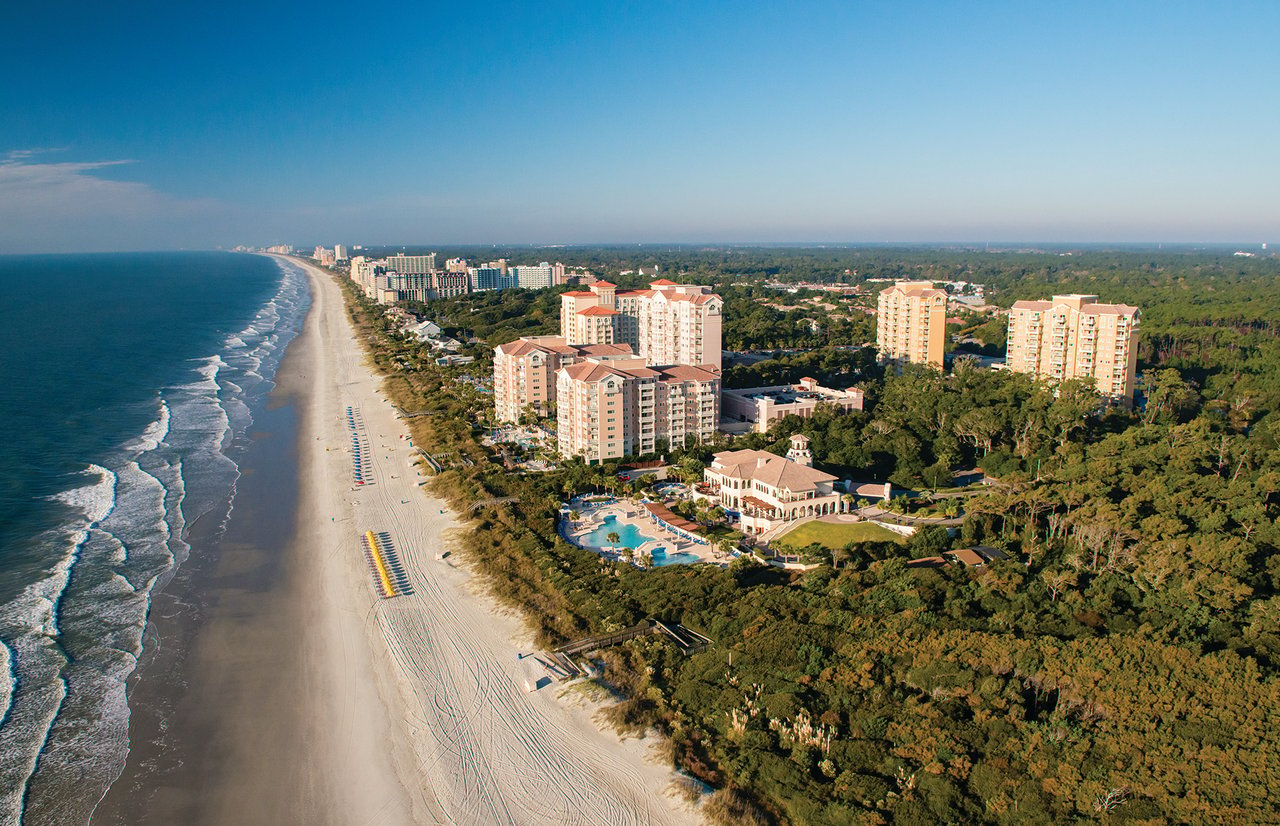
Browsing what's currently available across Myrtle Beach is a reasonable way to see what that Montclair equity could actually buy here, from condos close to the boardwalk to single-family homes further inland. The wider range of South Carolina neighborhoods I work in is also worth a look, since the right fit depends a lot on what kind of community you're used to and what you're hoping changes about daily life.
Let's Run Your Actual Numbers
A rising home value and a well-known tax gap are useful starting points, but they don't tell you what your specific Montclair home would sell for, what a comparable property here actually costs, or how your full financial picture nets out once every line item is accounted for. That's a conversation, not a set of statewide averages. A little more about the 15 years I've spent helping people make exactly this kind of move is there if you'd like the background on who you'd be working with, and if you're ready to talk specifics, reach out here and we'll go through what moving to Myrtle Beach from Montclair would actually look like for your household — not just the statewide numbers.