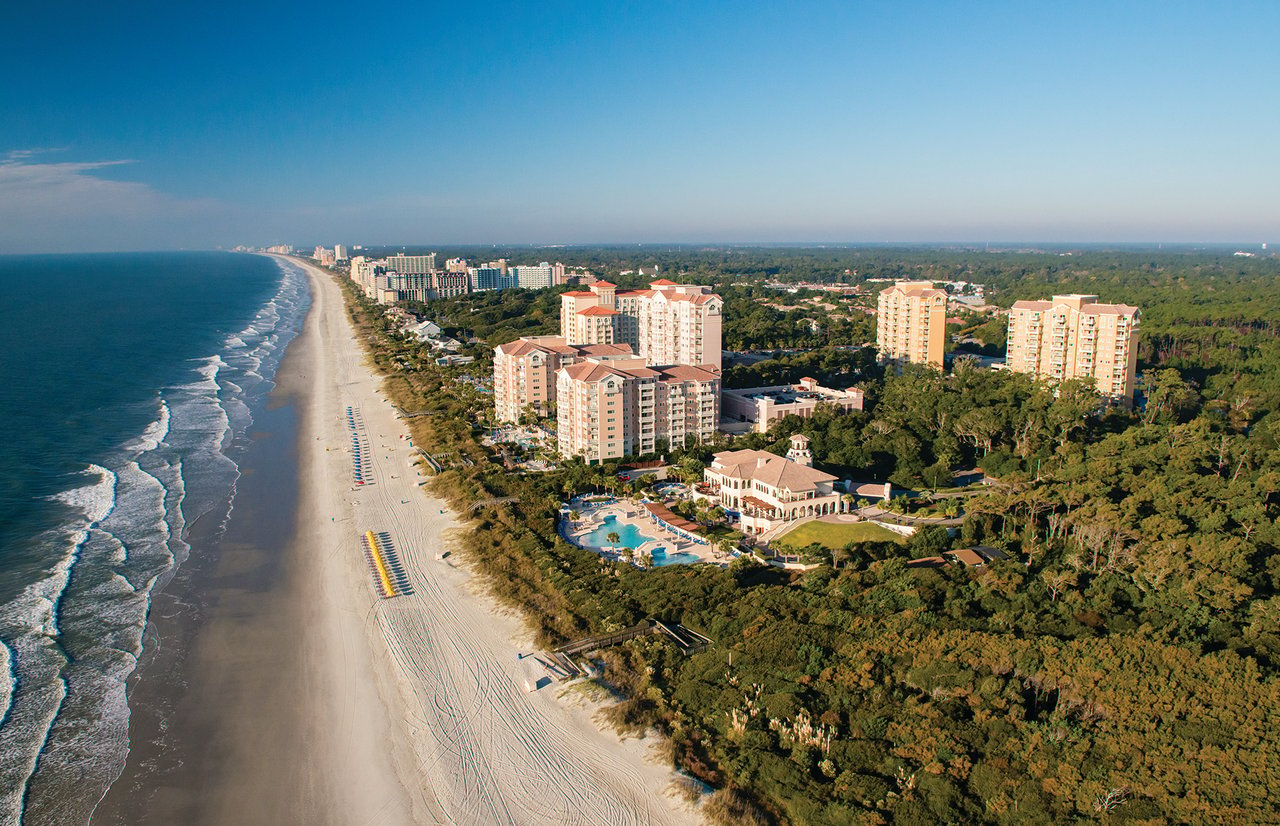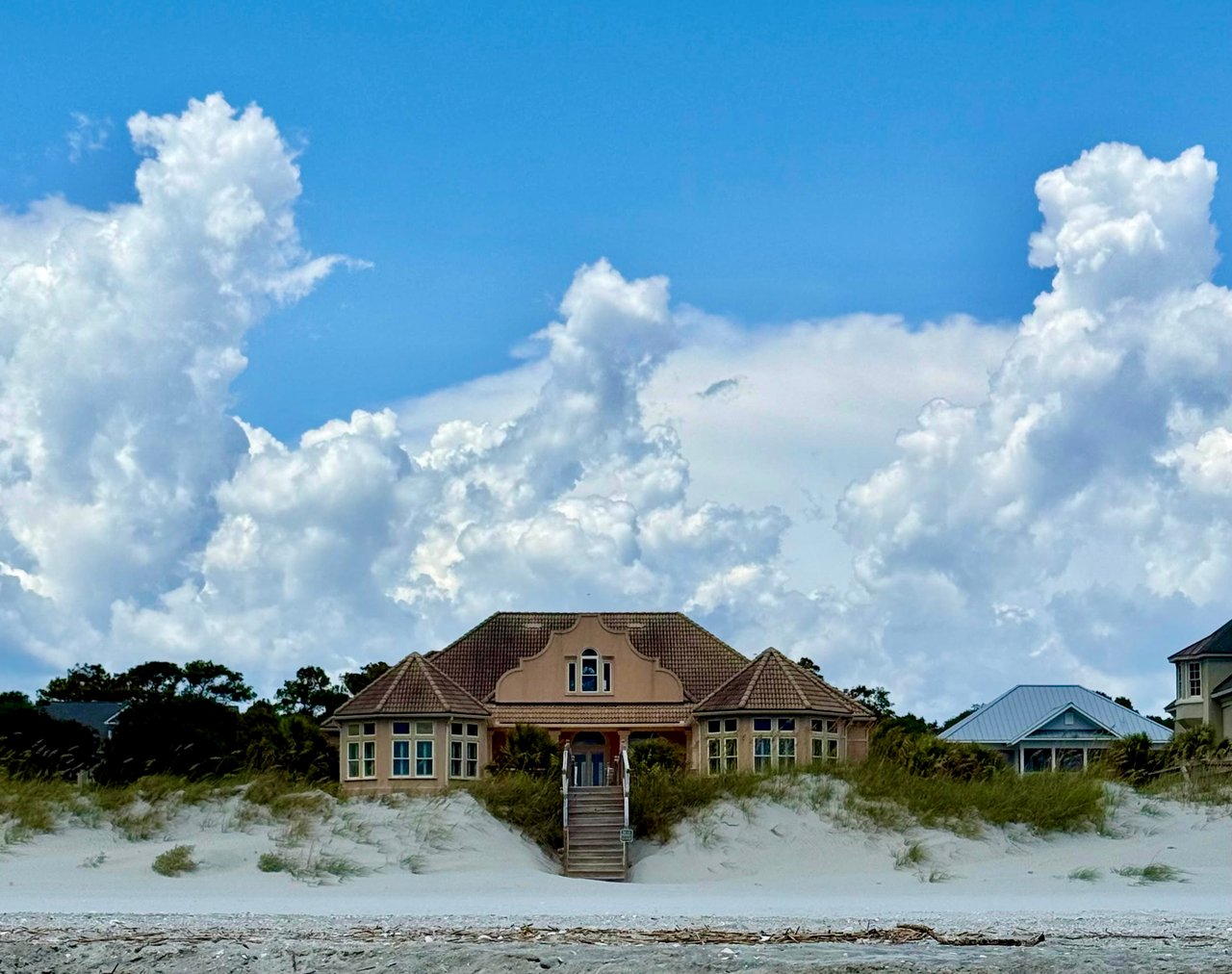
This summer, one of the most significant oceanfront homes in Grande Dunes changed hands — off-market, no listing on Zillow. It was one of the very first oceanfront homes ever built in Grande Dunes Ocean Front, the highest price point section of one of Myrtle Beach's most prestigious communities.
The seller was a legacy Myrtle Beach family whose patriarch built his fortune in land development. The buyer was another legacy Myrtle Beach couple, whose own fortune came from single-family development around Myrtle Beach — including the luxury Plantation Lakes neighborhood in Carolina Forest. Two families who, between them, have probably forgotten more about Myrtle Beach real estate than most of us will ever know.
And they still used a real estate agent.
That's the whole argument, really. If families who've spent generations building homes, developing land, and closing deals in this market still don't buy or sell without representation, that should tell you something about what a good agent actually does — and why it's worth far more than people assume before they've needed it.
Here's what a buyer's agent is actually doing for that 2–3%, in a market like the Grand Strand.
Building a showing schedule that isn't a shot in the dark. Myrtle Beach's market covers a lot of ground — the Grand Strand runs nearly 60 miles, and inventory turns fast. Trying to self-navigate which homes are worth your Saturday, in what order, in what neighborhoods, without someone who actually understands your budget, your must-haves, and your dealbreakers, means burning weekends on the wrong houses while the right one gets an offer.
Cutting through the noise. For anyone relocating from out of state, the internet is a firehose — Zillow, Realtor.com, Facebook groups, YouTube tours, all with conflicting or outdated information. An agent filters that noise down to what's actually true, actually available, and actually worth your time.
Managing the full inspection process. Foundation, roof, HVAC, general home inspection, wood-destroying insect (pest), mold, flood — and in an HOA community, a full review of the association's financials and rules. New construction isn't exempt either; a brand-new builder home still needs its own inspection, because "new" doesn't mean "built without a punch list."
Negotiating on your behalf. This one gets overlooked constantly: the seller's agent has a legal and financial duty to the seller, not to you. Without your own representation, there's no one in the transaction whose job is to negotiate price, repairs, or terms specifically in your interest.
Neighborhood knowledge you can't get from a listing photo. Have you driven the street at 9 p.m. on a Friday? Do you know which lot floods after a heavy rain, which streets are cut-through traffic for a nearby school, or which HOA is genuinely well-run versus one that just looks good on paper? A local agent has usually already answered those questions before you ask them — and can often introduce you to a few future neighbors before you've even closed.
Reading traffic patterns most buyers never think to check. A quiet cul-de-sac on a Tuesday morning showing can turn into a school-zone bottleneck at 3 p.m. Knowing that before you buy, not after, is part of the job.
Insurance-savvy guidance that can genuinely save you money. Is the roof strapped for wind? How many panes are in the windows? Is the community rated for fire protection, and how far is the home from a hydrant or fire station? What security system is installed, and what's the utility setup? Every one of those questions can affect your homeowners insurance premium — often significantly — and most buyers don't know to ask any of them.
Knowing the real days on market. That "just listed" tag doesn't always tell the real story. A lot of homes were quietly shopped, price-tested, or under a prior contract before they ever hit the public portals. A good agent knows which listings are genuinely fresh and which have been sitting.
Handling the mortgage process — which is not what it was 20 years ago. If the last time you got a mortgage was two decades ago, the process has changed completely. In 2026, a single deal can easily generate 100 or more emails between lender, buyer, agent, and closing attorney. We work with roughly ten lenders across four states, all of whom offer preferred rates on South Carolina single-family homes — and someone needs to be managing that flow of requests so it doesn't fall on you.
Coordinating with a closing attorney — because South Carolina requires one. Unlike many states, South Carolina law requires a licensed attorney to conduct real estate closings. A buyer's agent works directly with that attorney on title review, closing documents, and scheduling, so the legal side of your purchase is handled by people who do it every day (South Carolina real estate closing requirements).
Providing move-day concierge service. If your moving truck shows up a day early, or the closing gets pushed, or the keys aren't where they're supposed to be — who's handling that? We are.
Even shipping your car. I've personally coordinated the shipping of sixteen vehicles for relocating clients. It's a small thing until it's your car, your timeline, and your problem.
A vendor network you don't have to build from scratch. You could spend hours reading Google reviews trying to find someone trustworthy for every task that comes with a new home. Or I can just give you Dan's number — he lives in Plantation Lakes, and he'll be over to mount your TVs the next day.
A few more worth mentioning:
Reviewing seller disclosures and HOA documents line by line, catching the details buyers routinely skim past — special assessments, pending litigation, deed restrictions, and rental caps that matter a great deal if you're buying an investment or second home.
Navigating flood zones and elevation certificates, which carry real weight along the Grand Strand. Knowing whether a home sits in an AE flood zone versus an X zone can mean a difference of thousands of dollars a year in insurance, and it should factor into your offer before you're under contract, not after.
Managing contract deadlines and earnest money. Every South Carolina purchase agreement runs on a strict clock — inspection periods, financing contingencies, appraisal deadlines. Miss one, and you can lose your earnest money or your right to walk away. An agent tracks every date so you don't have to.
Handling appraisal gaps and repair negotiations after inspection, which is often where deals are won or lost — especially in a competitive coastal market where cash buyers and out-of-state offers are common.
Access to off-market and pocket-listing opportunities, like the Grande Dunes sale that opened this piece. Some of the best inventory on the Grand Strand never touches the public market at all, and those doors tend to open through relationships, not portals.
The Brokerage Behind Your Agent Matters, Too
Representation isn't only about the agent — it's also about the brokerage standing behind that agent. I'm affiliated with Real Brokerage Inc., which trades on the Nasdaq under the ticker REAX. That's a meaningfully different structure than a small independent shop or a local franchise office, and it's worth understanding why.
Real operates in all 50 states and Canada, supports tens of thousands of agents nationwide, and — as a publicly traded company — is required to file audited financials, maintain formal legal and compliance departments, and answer to SEC reporting standards that a small independent brokerage simply isn't subject to. Real is also in the process of merging with RE/MAX to form Real REMAX Group, a combination expected to close in the second half of 2026 and target roughly $2.3 billion in combined pro forma revenue — scale that brings deeper institutional resources, insurance capacity, and infrastructure than a one-office or single-franchise brokerage typically has (Real Brokerage / RE/MAX merger details).
Why does that matter to you as a buyer or seller? Every real estate transaction carries some risk of a dispute — over disclosures, repairs, financing, or contract terms. If a transaction ever did require legal action, the depth of resources standing behind your agent can matter. A small independent brokerage or a single-office franchise is generally backed by one principal broker's local insurance and limited legal resources. A large, publicly traded national brokerage carries a different level of corporate infrastructure, formal errors-and-omissions coverage, and legal accountability by virtue of its size and public reporting obligations. That's not a guarantee of any particular outcome in any specific dispute — every transaction is different, and buyers and sellers should always consult their own attorney about their specific situation — but it's a real, structural difference in what's standing behind your agent, and it's one more reason the choice of brokerage, not just agent, is worth a second look.
The families in that Grande Dunes transaction didn't need an agent to find the house — they already knew each other. What they needed was someone to manage the process, protect their interests, and get the deal done cleanly. That's true whether the home is a $3 million oceanfront estate or a starter home in Carolina Forest. The market, the paperwork, and the stakes are different — the value of good representation isn't.
If you're buying or selling on the Grand Strand and want someone in your corner who knows this market from the inside, let's talk.
Call Phil Riola with Real Brokerage Inc. and Phil Riola Homes today to discuss more about why we love South Carolina! 📞 Cell: 610-428-6730 ✉️ [email protected]